
Are orthodontic aligners better than traditional braces?
What is the best way to treat misaligned teeth? Clear trays or metal brackets? One of the many confusions patients today face while choosing a treatment for their teeth is whether to choose orthodontic aligners or traditional braces. While both options are capable of treating misaligned teeth with their own perks and quirks, choosing the right one depends on the complexity of the case, lifestyle, and long-term goals. Understanding the differences can help you make an informed decision with guidance from a qualified dental professional.
What are the differences between orthodontic aligners and traditional braces?
Analyse the differences between traditional braces and aligners to understand which is the better choice.
Written By: Department of Orthodontic Treatment
Reviewed By: Specialist Dental Practitioner
Traditional braces
Metal braces help tooth realignment in mild to severe cases in children or adults. The process involves fixing metal brackets onto the tooth’s surface and placing a metallic wire through these brackets. This wire exerts pressure on the teeth over time and moves the teeth into their proper position. Modern braces come with ceramic brackets that matches the colour of the teeth and lingual (hidden behind the teeth) options for a less visible appearance.
Benefits
- Effective in treating severe and complex cases
- Budget-friendly option
- No requirement for patient compliance, as they are fixed
Drawbacks
- Visible appearance
- May cause soreness and irritation initially
- Fixed fixtures
- Difficulty in chewing hard food and cleaning properly
Orthodontic aligners
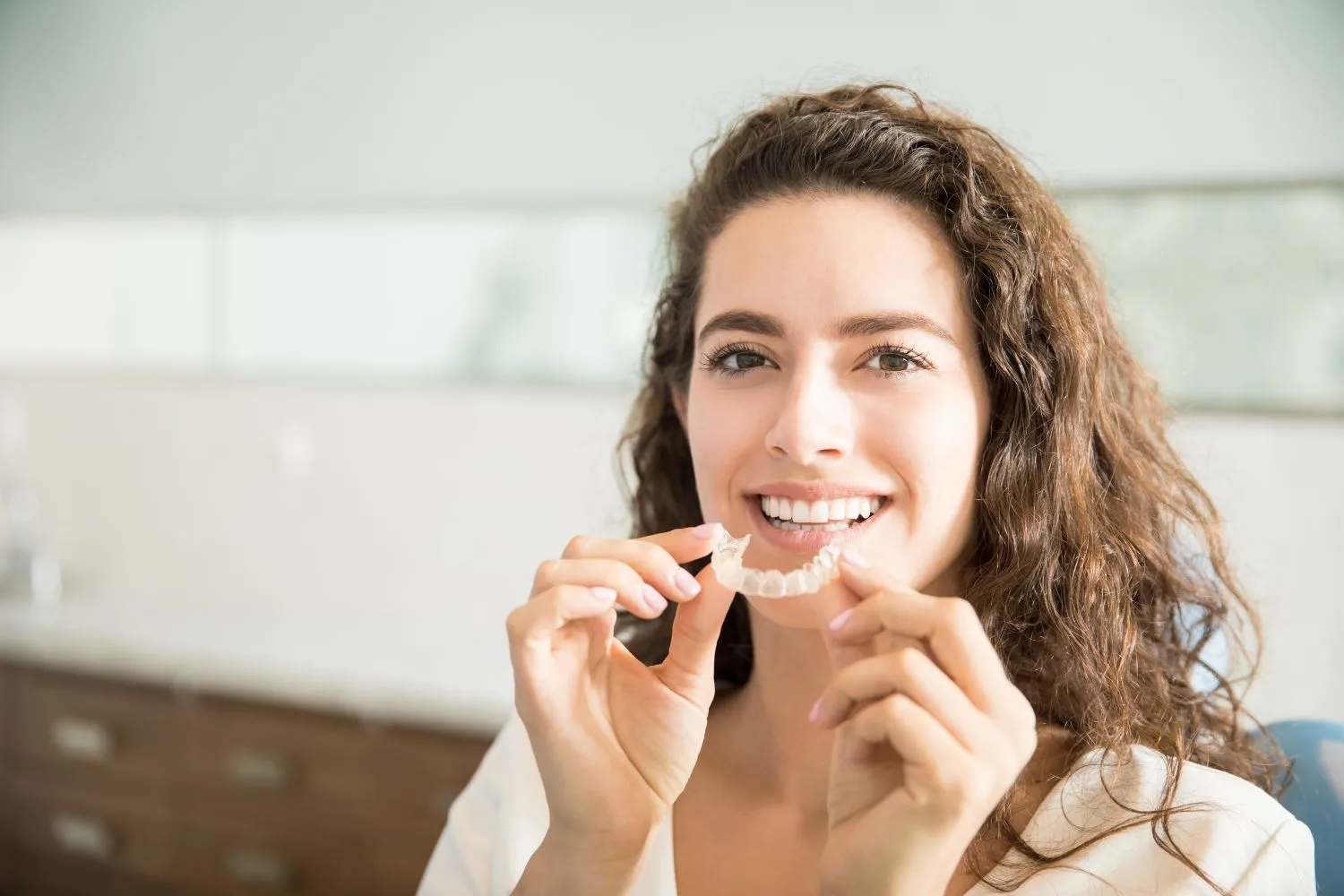
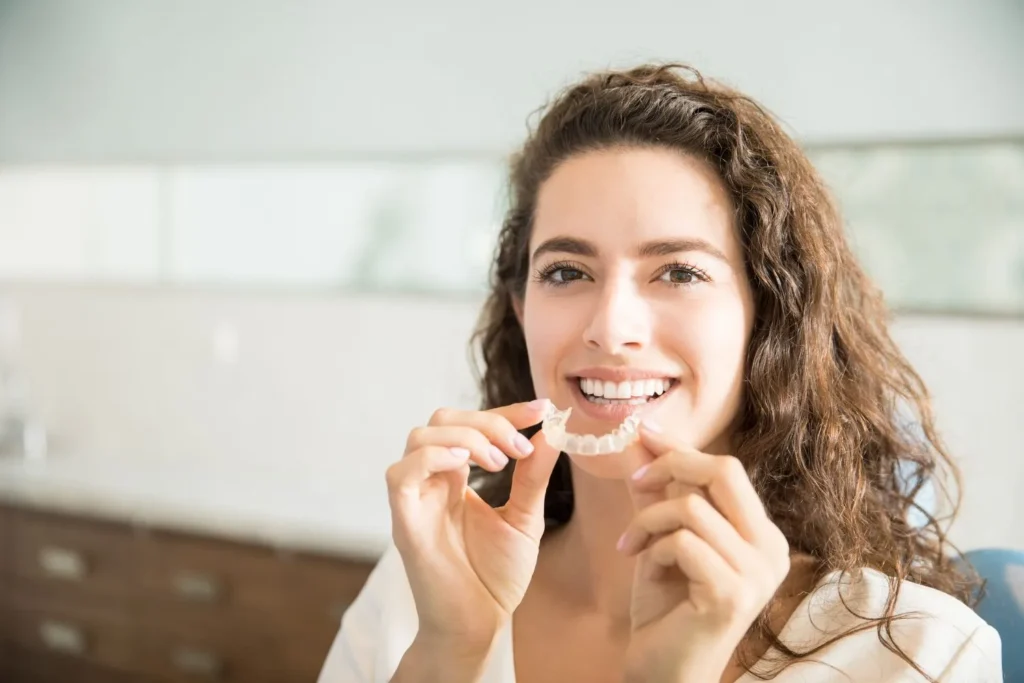
Orthodontic or clear aligners are custom-made, invisible trays of medical-grade plastic that help gradually shift teeth to their proper positions with consistent use. Compared to traditional braces, they are slightly more expensive but provide the patient with greater comfort during use.
Benefits
- Nearly invisible appearance
- Effective for mild to moderate cases
- Removable by the patient for easier chewing and cleaning
- No dietary restrictions
- Smooth plastic material that causes less irritation
Drawbacks
- Requires patient compliance for results
- Slightly more expensive than braces
What should you consider before choosing?
What should you consider before deciding on the best option for you? Some major aspects to consider before choosing between orthodontic aligners and traditional braces are:
- Budget considerations
- Lifestyle preferences
- Oral hygiene habits
- Commitment level
The best dental clinic in Calicut can offer you the perfect choice with personalised treatment plans. At Mother Dental, we offer professional care from the best dentist in Calicut after thorough evaluation and evidence-based recommendations to deliver safe and predictable results.
Conclusion
So, can we conclude that orthodontic aligners are better than traditional braces? The answer depends on your dental condition and lifestyle preferences. While aligners offer comfort and discretion, braces remain highly effective for complex corrections. The most important step is consulting a qualified dentist in Calicut who can assess your case and guide you toward the right treatment for long-term oral health.
FAQs
Traditional braces are recommended for children and adults with more complex and severe cases that require significant realignment.
The duration of aligner treatment varies according to the case complexity. Generally, aligners take 12 to 18 months to show significant results.
Most patients prefer clear aligners because of their invisible appearance, removability, and comfort.
When it comes to cost, aligners are more expensive than braces. Braces are considered a more budget-friendly option than aligners, even though many patients prefer them due to the comfort and ease of use.
At Mother Dental, we have qualified dental professionals who can prescribe appropriate, personalised treatment plans according to your concerns and case complexity.