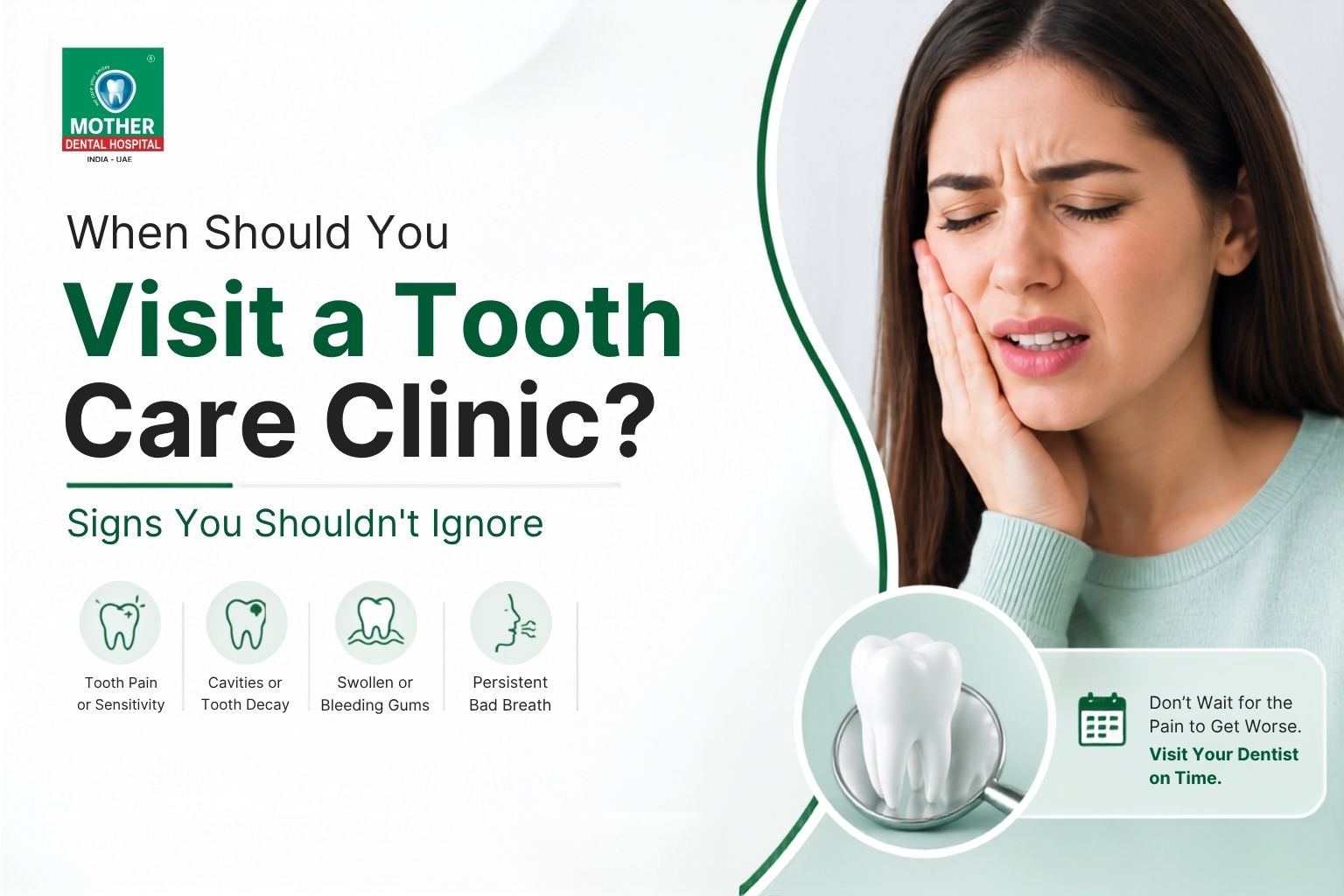
When Should You Visit a Tooth Care Clinic? Signs You Shouldn't Ignore
Written By: Department of General Dentistry
Reviewed By: Specialist Dental Practitioner
Last Updated: August 2026 | Read Time: 5 mins
Most people put off seeing a dentist until something hurts. But pain is usually a late sign, not an early one. By the time you feel it, the problem has often been building for a while. Here’s what to watch for, what usually causes it, and what to do next.
1. Tooth pain that doesn't go away
Why it happens: a cavity that’s gone deep, a cracked tooth, or an old filling coming loose.
This usually starts small a twinge when you eat something sweet or chew on one side. If it’s still there after a day or two, or worse when you bite down, don’t wait for it to peak. Book an appointment within a few days; if the pain is sharp and constant, treat it as urgent.
2. Bleeding gums
Why it happens: leftover food and bacteria building up along the gumline because of inconsistent brushing or flossing.
Often shows up first as pink in the sink when you brush, or slight bleeding when you floss. If it happens more than once or twice a week, it’s not “brushing too hard” — it’s your gums getting irritated and infected. Get a professional cleaning before it gets worse.
Also Read: Bleeding Gums: Causes
3. Bad breath that doesn't go away
Why it happens: bacteria stuck between teeth or under the gums that brushing alone can’t reach, or a hidden cavity.
If brushing, mouthwash, and water don’t fix it within a few hours, it’s probably not something you ate. Get a cleaning and a check for hidden decay rather than relying on mints.
4. Sensitivity to hot, cold, or sweet foods
Why it happens: the hard outer layer of your tooth has worn thin, or a cavity or gum recession has exposed the softer, more sensitive part underneath.
Starts as a quick, sharp pain that fades fast and easy to shrug off. If it keeps happening with the same tooth, get it checked before it turns into constant pain.
5. Swelling in the face, jaw, or gums
Why it happens: an infection has built up at the root of a tooth (often called a tooth abscess) and has nowhere to drain.
Usually starts as mild puffiness near one tooth, sometimes with a bad taste or mild fever. This isn’t a “wait and see” — call a clinic the same day, or go to emergency care if the swelling spreads fast or makes it hard to breathe or swallow.
6. A loose or shifting adult tooth
Why it happens: long-term gum infection has weakened the bone and tissue holding the tooth in place, or the mouth has taken an injury.
You might notice it while eating, or feel a slight wobble with your tongue. See a dentist soon — the earlier it’s caught, the better the chance of saving the tooth.
7. Jaw pain, clicking, or a locking feeling
Why it happens: the jaw joint is under strain, often from grinding or clenching your teeth at night, or your bite doesn’t line up evenly.
Often noticed first thing in the morning or after a lot of talking or chewing. Pain, stiffness, or a jaw that catches or locks is worth getting checked — a dentist can tell you if you need a night guard or further treatment.
8. Pain or swelling around a wisdom tooth
Why it happens: the wisdom tooth doesn’t have enough room to come in properly and gets stuck or infected.
Common in the late teens to twenties. This condition causes soreness at the back of your jaw, sometimes making it difficult to open your mouth fully. Get an X-ray before it affects the tooth next to it.
Also read: Benefits of Keeping Wisdom Teeth: Myths and Reality
9. Mouth sores that won't heal
Why it happens: usually minor irritation, stress, or accidentally biting your cheek — but a sore that won’t go away needs a closer look.
Most sores clear up within 10–14 days on their own. One that lasts longer, especially if it’s painless, should be checked rather than assumed to be “just a sore.”
10. A cracked, chipped, or broken tooth
Why it happens: biting down on something hard, an old filling weakening over time, or grinding your teeth.
It may not hurt at first, but a crack lets bacteria inside the tooth. Get it looked at within a week or two sooner if you feel a sharp edge or any sensitivity.
11. Dry mouth that doesn't go away
Why it happens: certain medications, not drinking enough water, or breathing through your mouth while you sleep.
Saliva naturally protects your teeth, so ongoing dryness raises your risk of cavities and gum problems. Mention it at your next check-up so the cause can be identified.
12. A metallic taste or a change in taste
Why it happens: a gum infection, an old filling starting to leak, or a problem with a crown.
Sometimes it comes on suddenly, sometimes gradually. If it lasts more than a few days without an obvious cause like medication, get it checked.
13. Grinding or clenching your teeth
Why it happens: usually stress, or a bite that isn’t quite even often happens without you realizing, especially at night.
It often shows up as a sore jaw or dull headache when you wake up, or a partner mentioning the sound at night. A dentist can check for wear and fit you for a night guard if needed.
14. It's been over 6 months since your last check-up
Why it matters: plaque and early decay don’t always cause pain or symptoms until they’ve already progressed.
No pain doesn’t mean no problems. A routine visit catches small issues while they’re still simple and inexpensive to fix.
Also Read: Why Regular Dental Check-ups Are Essential
How to Choose the Best Dental Clinic for Your Needs
Once you’ve spotted the signs above, the next step is picking the right clinic — not just any clinic, but one that can actually solve your issue. Here’s why Mother Dental Hospital is that clinic.
- Everything under one roof: check-ups, X-rays, and treatment at the same place, so nothing gets lost between visits.
- Specialists for specific needs: not one dentist handling everything, but the right expert for root canals, gum care, implants, and more.
- Modern equipment: for accurate diagnosis and fewer repeat visits.
- Transparent pricing: with insurance and flexible payment options.
- Same-day appointments: for urgent pain or swelling.
- Records that follow you: especially if you split time between our Kerala and UAE locations.
- Follow-up care: after procedures, not just treatment and done.
- 10,000+ patients treated: a track record built on consistent care.
Don't Wait for the Pain to Decide for You
Every sign on this list is easier, faster, and cheaper to treat today than it will be in a month. The tooth that’s a simple filling now can turn into a root canal later. The gums that just need a cleaning now can mean a lost tooth down the line. The only real cost of waiting is a bigger problem.
If any of these signs sound familiar, don’t sit on it, book a check-up at Mother Dental Hospital and get it looked at properly.